
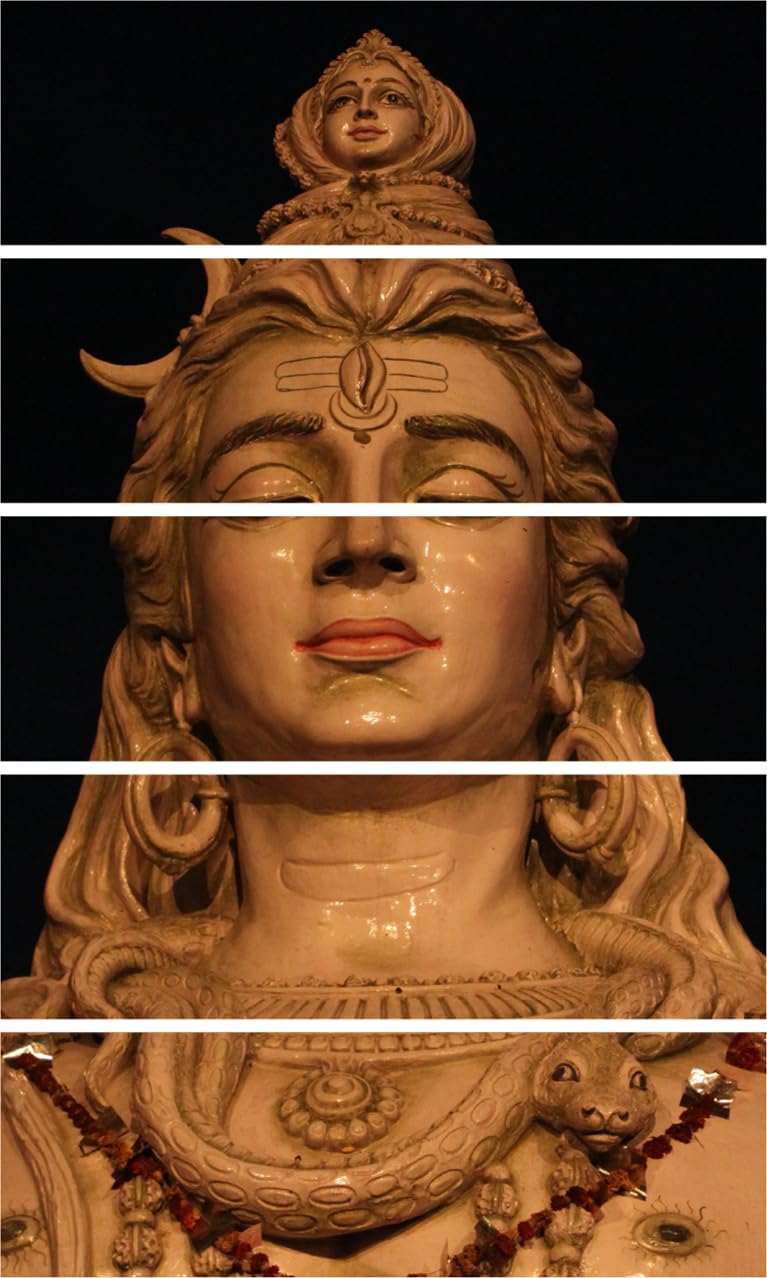
Shiva Splash Zone Framed Multi-Frame Wall Art Magic
You may also like

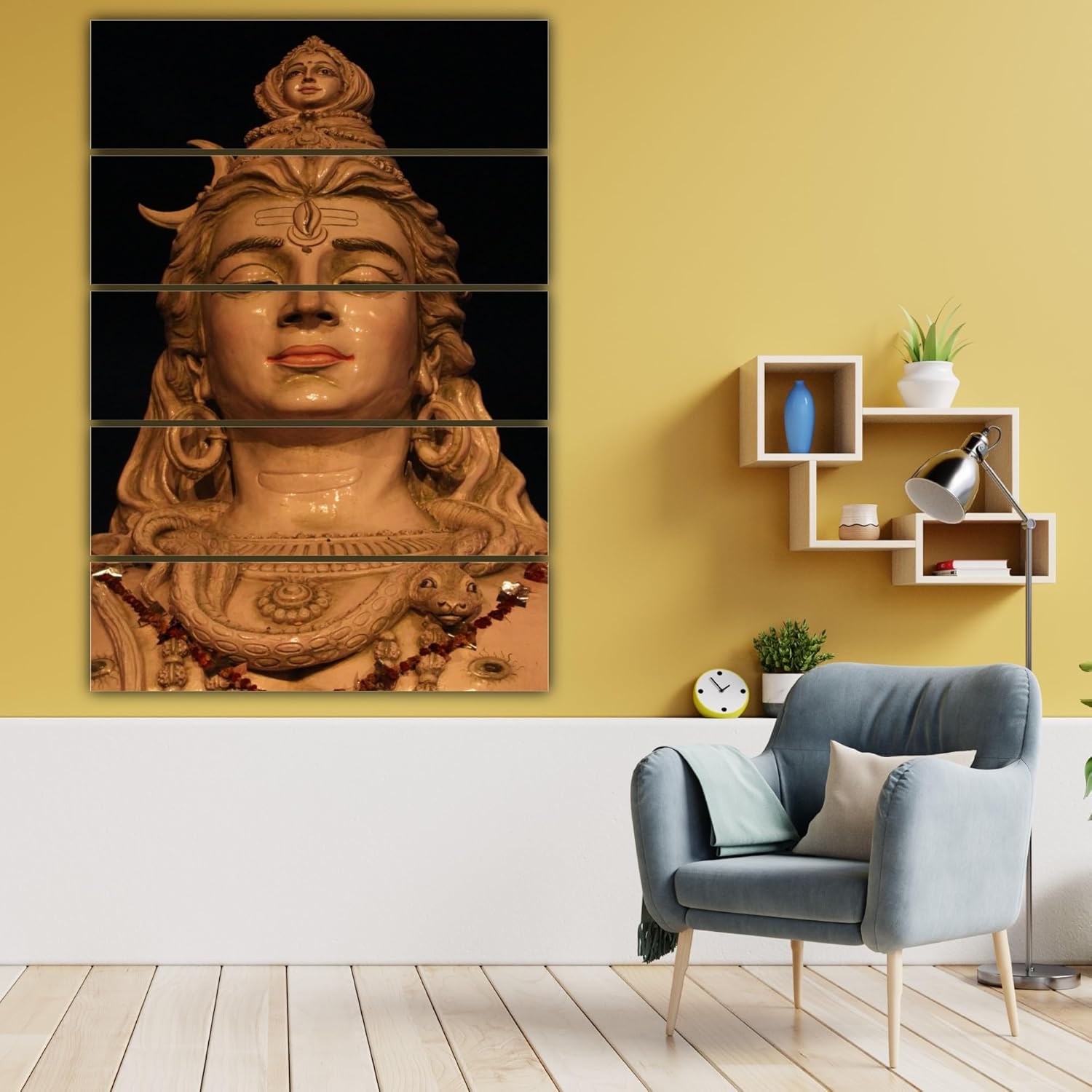
Moolwan 5-Panel Shiva Canvas Wall Art Painting (127x76cm) - Multi-Frame Devotional Art
You've measured your living room wall three times. Maybe four. The tape measure says 360 cm (12 feet), but you're still not confident because every article online talks about American living rooms with different proportions. Every guide says something different, and none account for the 8-foot sofa you already have or the 9-10 foot ceiling height that's standard in Indian homes. You keep second-guessing: is 127cm actually right?
Here's what actually matters: your 12-foot wall needs art that feels intentional, not lost or overwhelming. At 127cm wide, this 5-panel Shiva canvas covers roughly 35% of your wall—leaving 116cm of breathing space on each side. That's the visual balance Indian homes need: present enough to anchor the space above your sofa, restrained enough to work with the pooja shelf nearby or the family photos on adjacent walls. The beige-bronze tones aren't fighting for attention—they're designed to complement the cream, off-white, or light yellow walls that probably define your living room right now.
Why 127cm Works on 12-Foot Walls (and What Happens If You Go Smaller or Bigger)
Let's break down the math because "looks good" isn't enough when you're spending ₹3,296.
Your wall is 360cm (12 feet). This canvas is 127cm. That's 35% coverage—the proportion that interior designers target for art above sofas in Indian living rooms. Here's why that number matters:
Space breakdown: 116cm empty on the left, 127cm canvas in center, 116cm empty on the right. Your eye naturally balances the negative space. The canvas feels anchored, not floating.
What if you went smaller (say, 100cm)? You'd have 130cm empty space on each side. That's 28% coverage. In a 12x14 foot living room with 9-foot ceilings, 100cm looks undersized—like you were afraid to commit. Your mother-in-law won't say it directly, but you'll notice her eyes scanning the wall, looking for something more.
What if you went bigger (say, 150cm)? You'd have just 105cm on each side. That's 42% coverage. It starts crowding the space, especially if you have a window nearby or a floor lamp in the corner. In Indian homes where furniture is close to walls, 150cm can feel imposing rather than devotional.
The 5-panel design compounds the advantage. Each panel is roughly 25cm wide, creating natural visual breaks that mirror the modular way Indian living rooms are arranged—sofa here, side table there, TV unit opposite. It reads as "designed for this space," not "generic art."
Why Beige-Bronze Tones Work in Indian Living Rooms (Not Just Online Photos)
You've probably seen this art in the listing photos—warm bronze tones against a black background, looking dramatic and sculptural. But what will it actually look like against your cream or off-white walls?
The beige-bronze palette is specifically forgiving for Indian homes. Here's why:
Morning light (7-10 AM): The warm tones catch natural sunlight streaming through your windows. The bronze reflects softly, creating a gentle glow that doesn't compete with your morning tea routine. The beige base keeps it calm, not garish.
Afternoon (12-4 PM): This is when most Indian living rooms get harsh, direct sunlight. Darker canvases can look washed out or create glare. The beige-bronze tones absorb and diffuse light rather than reflecting it sharply. Your living room stays comfortable, not squinty.
Evening LED (6-10 PM): Most Indian homes use warm white LEDs (2700-3000K). The bronze tones harmonize with that warmth, while the beige prevents the art from disappearing into your cream walls. It stays visible without demanding attention during family time or when guests are over.
With brown/beige sofas: If your sofa is the standard brown or beige fabric common in Indian homes, this canvas creates visual continuity. The bronze adds richness without clashing. The beige provides neutral grounding.
With wooden furniture: Most Indian living rooms have wooden coffee tables, TV units, or side tables. The warm bronze tones echo that wood grain, creating a cohesive aesthetic. It doesn't feel like "art" floating disconnected from your furniture—it reads as part of the room's design language.
The black background in each panel matters too. It creates depth and makes the Shiva imagery stand out without needing bright, distracting colors. In a room that already has color from curtains, cushions, or a rug, this restraint is valuable.
Installation Takes 15 Minutes (Even If You're Not Handy)
Let's be honest: you're probably worried about drilling into your walls. Especially if you're renting and that ₹50,000 deposit is at stake.
Here's the reality: this canvas weighs 3kg total—about as much as three bags of atta. It's mounted on a 1.5-inch pinewood frame with pre-attached hooks on the back. You need exactly two small nails (or two hammer-in picture hooks if you want to be extra careful about wall damage).
Step 1 (2 minutes): Measure 150-160cm from the floor. That's eye level when you're standing, slightly above sofa-back height when seated. Mark two points 127cm apart horizontally using a pencil.
Step 2 (3 minutes): Tap in two small nails at your marks, angled slightly upward. Or use adhesive picture hooks rated for 5kg if you want zero-commitment hanging (available at any hardware store for ₹40).
Step 3 (5 minutes): Hang the 5-panel set. The center panel goes in the middle, the other panels flank it at equal spacing. The frame design keeps them aligned—you're not guessing at gaps.
Step 4 (5 minutes): Step back, check level with your eyes (not a spirit level—your perception is what matters), adjust if needed.
Done. No electrician, no handyman, no YouTube tutorials about drywall anchors (because Indian walls are brick or concrete—simple nails hold fine).
Rental-friendly removal: When you move out, pull the nails, fill the tiny holes with toothpaste (seriously—it works on cream walls), smooth with your finger, let dry. Your landlord won't notice. If you used adhesive hooks, peel them off—zero damage.
How This Compares to the 100cm and 150cm Sizes You've Been Considering
You've probably got multiple sizes saved or open in different tabs. Let's be direct about what changes:
100cm (smaller):
- Coverage: 28% of a 12-foot wall
- Visual impact: Understated, safe, slightly timid
- Best for: 10-foot walls, bedrooms, or if you have multiple art pieces nearby
- Price difference: Usually ₹300-500 cheaper
- Honest take: In a 12-foot living room, 100cm can look like you ran out of budget or confidence
127cm (this one):
- Coverage: 35% of a 12-foot wall
- Visual impact: Balanced, intentional, devotional without being overwhelming
- Best for: 12-foot walls, living rooms, pooja room adjacent walls
- Price: ₹3,296 (middle of range)
- Honest take: The Goldilocks size for Indian living rooms—neither too bold nor too modest
150cm (larger):
- Coverage: 42% of a 12-foot wall
- Visual impact: Commanding, statement piece, dominates the space
- Best for: 14-foot walls, minimalist rooms with little other decor
- Price difference: Usually ₹600-800 more
- Honest take: Impressive in photos, but in a typically-furnished Indian living room, it can crowd the space
The 5-panel design also matters here. At 127cm, each panel is roughly 25cm—visually distinct sections that your eye can process individually. At 150cm, the panels stretch to 30cm each, and the overall effect starts feeling more like "wall coverage" than "curated art."
If you're unsure, 127cm is the safer bet. It's large enough to feel intentional but restrained enough to work even if your furniture arrangement changes later.
What This Will Look Like in Your Living Room (Not Just Online Photos)
Let's set realistic expectations because the listing photos show this on a perfectly white wall with professional lighting. Your living room is different.
Color shift: The bronze will look slightly warmer against cream walls (most Indian homes) compared to the black background in the photos. That's good—it creates harmony rather than stark contrast. The beige tones will blend more than they "pop," which prevents the art from feeling too aggressive in a family space.
Lighting conditions: If your living room gets strong afternoon sun, the canvas will brighten during midday. That's when the moisture-resistant coating (standard on Moolwan canvases) proves valuable—no fading over monsoon seasons or summer glare. In evening LED light, the bronze catches warmth while the black recedes, making the Shiva imagery feel present without harsh shadows.
Viewing distance: From your sofa (likely 8-10 feet away), you'll see the full composition—the serene Shiva face across the panels, the intricate details on the crown and jewelry. When you walk past (2-3 feet away), the panel breaks become obvious, and you can appreciate the close-up textures. Both viewing modes work.
Dust accumulation: The canvas has a moisture-resistant coating, but it's still fabric. In Indian homes (especially during construction season or near roads), expect a light dust layer every 2-3 weeks. Quick fix: dry microfiber cloth, gentle wipe. Takes 30 seconds per panel.
Proportions in context: 127cm wide x 76cm tall means this is a horizontal landscape piece. That suits the space above sofas, which are typically 70-80cm tall. The canvas sits in proportion to your furniture, not awkwardly tall or squashed.
With existing decor: If you have a pooja shelf nearby, the devotional Shiva theme creates thematic continuity. If you have family photos on adjacent walls, the neutral tones won't clash—bronze and beige are accommodating colors.
The honest truth: this won't transform your living room into a magazine spread. It will look like a thoughtfully chosen piece of devotional art that fits your space and respects your home's existing aesthetic. For ₹3,296, that's the realistic win.
Quick Specifications
- Dimensions: 127cm (W) x 76cm (H) x 0.6cm (D)
- Panel count: 5 panels, multi-frame design
- Weight: 3kg (3000 grams) total
- Frame material: 1.5-inch kiln-dried pinewood (12% moisture content, monsoon-resistant)
- Canvas material: 340 GSM cotton with moisture-resistant coating
- Ink type: Eco-solvent, UV-resistant (no fading)
- Subject: Shiva devotional art (close-up sections across panels)
- Color palette: Beige, bronze, golden tones with black background
- Price: ₹3,296
- Delivery: 5-6 days (metro cities), 6-8 days (tier-2/tier-3 cities)
- Wall compatibility: Brick, concrete, drywall (standard Indian walls)
- Hanging hardware: Pre-attached hooks (nails not included)
- Maintenance: Dry cloth wipe every 2-3 weeks
- Climate rating: 70-85% humidity, 5°C-45°C temperature range (Indian monsoon-tested)
- Rental-friendly: Yes (minimal wall damage, easy removal)